Expanding Tactical Fiber Systems’ Military Product Portfolio with DuraTAC® Armored Fiber Cables and Amphenol Military Fiber Connectors
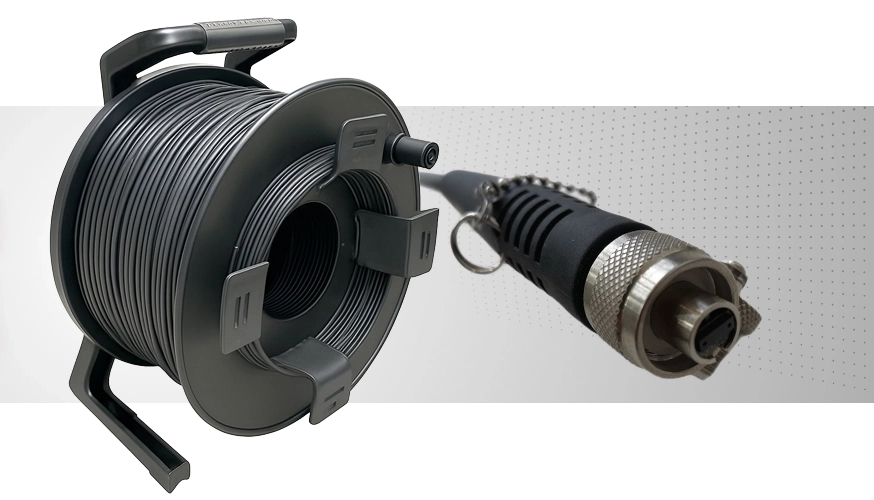
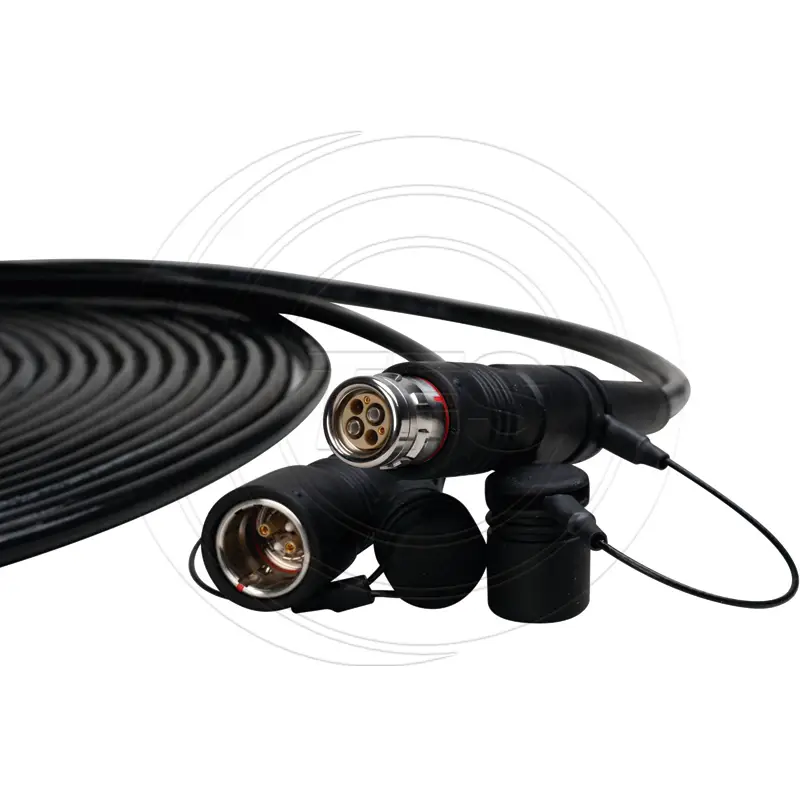
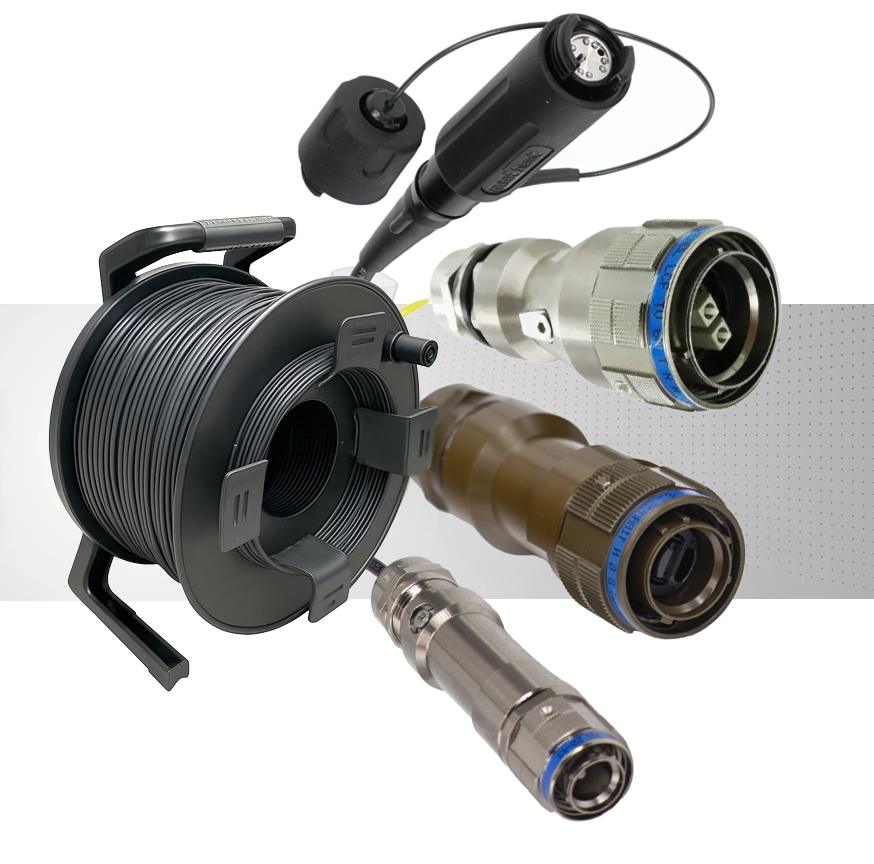
Modern military platforms are becoming increasingly dependent on high-speed digital communications. Armored vehicles, combat aircraft, naval vessels, unmanned systems, and advanced battlefield command networks require reliable transmission of large volumes of data under the harshest environmental conditions. Fiber optics has become the preferred communication medium because of its immunity to electromagnetic interference, high bandwidth, low weight, and exceptional reliability. Tactical Fiber Systems (TFS), based in Europe (Spain), has established itself as a manufacturer of premium-quality DuraTAC® stainless steel armored fiber cables designed specifically for demanding military and industrial environments. Trusted by NATO communications programs and used in SpaceX launchs, DuraTAC® cables are engineered to survive conditions where conventional tactical fiber cables cannot. They offer up to ten times greater mechanical strength while maintaining excellent optical performance in extreme temperatures, humidity, vibration, and mechanical stress. Today, Tactical Fiber Systems is taking the next strategic step by expanding its product portfolio beyond premium armored cable assemblies to include a comprehensive range of military fiber interconnect solutions built around Amphenol military connectors. This significantly broadens the company’s capabilities and enables TFS to deliver complete fiber systems for virtually every military platform. From Premium Cable Manufacturer to Complete Military Fiber Solution Provider Military customers increasingly prefer suppliers capable of delivering fully integrated communication systems rather than individual cable components. By combining DuraTAC® armored fiber cable technology with Amphenol’s extensive military connector portfolio, Tactical Fiber Systems can now offer complete end-to-end fiber assemblies tailored to specific defense applications. This expanded product strategy allows TFS to support: Military armored vehicles Infantry fighting vehicles Main battle tanks Tactical command vehicles Military aircraft Helicopters Naval combat vessels Autonomous surface vessels Heavy unmanned aerial systems (UAVs) Missile defense systems Battlefield communication infrastructure C5ISR systems The result is a highly flexible product family capable of supporting virtually every military communication architecture. DuraTAC® — The Foundation of Every Assembly At the core of every solution is DuraTAC®, Tactical Fiber Systems’ proprietary stainless steel armored fiber cable. Unlike conventional tactical fiber, DuraTAC® incorporates a stainless steel armor layer that dramatically increases resistance to: Crushing Tensile loads Abrasion Repeated bending Harsh environmental exposure Extreme temperature variations Moisture and humidity The cable is suitable for permanent installation as well as rapidly deployable tactical systems and can be customized for virtually any fiber count, cable length, outdoor or indoor using, connector configuration, and installation requirement. This flexibility enables TFS to manufacture application-specific assemblies rather than relying on standardized off-the-shelf products. Amphenol Military Connectors Expand Application Possibilities The integration of Amphenol military fiber connectors extends the range of applications supported by Tactical Fiber Systems. Different military platforms require different connector technologies depending on operational requirements, environmental conditions, and installation constraints. By offering multiple connector families, TFS can optimize every assembly for its intended mission. HMA Expanded Beam Connectors Expanded Beam technology is the preferred choice for battlefield environments where connectors are repeatedly connected and disconnected under dirty, dusty, or muddy conditions. Unlike physical contact connectors, Expanded Beam technology minimizes contamination sensitivity while maintaining reliable optical performance. Applications include: Battlefield communications Air defense systems Tactical communication shelters Rapid deployment systems Mobile command posts Available with two, four, and eight optical fibers, HMA connectors provide IP68 environmental protection and comply with MIL-DTL-83526 military requirements. MPO Field Connectors Modern military communication systems increasingly require high fiber density. MPO Field connectors support 8, 12, and 24 fibers within a single compact connector, making them ideal for: High-capacity communication backbones Tactical data centers Battlefield networking Air defense command systems Combined with DuraTAC® armored cable, MPO assemblies provide exceptional bandwidth while reducing cable size and installation complexity. TVOP Series — MIL-DTL-38999 Series III The TVOP connector family is based on the widely adopted MIL-DTL-38999 Series III standard and incorporates proven 2.5 mm ceramic optical termini. These connectors are particularly suitable for: Military vehicles Ground combat systems Harsh industrial environments Mobile communication equipment Their modular design simplifies inspection, cleaning, and maintenance while offering configurations from two to eight optical channels. RNJOP Rackable Connectors Military command centers and naval systems often require rack-mounted communication equipment. RNJOP connectors provide a rugged rackable solution suitable for: Naval combat systems Military avionics Command and control vehicles Communication shelters Tactical server installations These connectors combine mechanical robustness with excellent optical performance for demanding military electronics. STARTOP Fiber Optic Connectors STARTOP connectors are specifically designed for aerospace and defense platforms utilizing MIL-DTL-38999 Series III interfaces. Typical applications include: Military aircraft Helicopters Mission computers Radar systems Sensor integration Naval electronics The ratchet coupling mechanism provides secure mating under high vibration while maintaining excellent optical alignment. Fibers for Next-Generation Military Vehicles Modern armored vehicles are rapidly transitioning toward fully digital electronic architectures. High-resolution cameras, active protection systems, electronic warfare equipment, autonomous driving technologies, AI-assisted mission computers, and multi-domain battlefield networking all require significantly higher data transmission capacity than copper wiring can efficiently provide. Fiber communication reduces system weight while improving immunity to electromagnetic interference and simplifying integration between distributed electronic subsystems. The combination of DuraTAC® armored cable and MIL-qualified Amphenol connectors provides a rugged communication infrastructure capable of withstanding the severe vibration, shock, and environmental conditions encountered by armored vehicles operating in combat. Reliable Communications for Military Aircraft Aircraft demand some of the most reliable interconnect solutions available. Fiber systems are increasingly replacing traditional copper wiring because they offer: Lower weight Higher bandwidth EMI immunity Improved signal integrity Reduced maintenance Tactical Fiber Systems now offers connector solutions compatible with aerospace standards, enabling complete fiber assemblies for avionics, mission systems, onboard networking, surveillance systems, and electronic warfare equipment. Naval Applications Naval environments combine saltwater corrosion, vibration, moisture, and continuous mechanical stress. The ruggedized connector portfolio together with DuraTAC® armored fiber enables reliable communication links throughout naval platforms including: Combat information centers Radar systems Sonar equipment Internal communication networks Navigation systems Weapon control systems Corrosion-resistant connector materials combined with stainless steel armored cable ensure long service life even in harsh maritime environments. Heavy UAVs and Autonomous Military Systems Large unmanned aerial systems are evolving into sophisticated airborne communication platforms carrying multiple sensors,